
Dishwasher Not Draining?
Eight Causes, Ranked
An inch of gray water in the bottom of the tub, dishes still gritty, and a cycle that ran its full hour like nothing happened. Eight things stop a dishwasher from draining, and they run from a 10 minute fix to a fault that needs a meter. One of them shows up on almost every new garbage disposal installed in a Baltimore kitchen.
Hablamos Español
Since 2011 · 10,000+ repairs · 60-day warranty
What Stops A Dishwasher
From Draining?
A dishwasher is not draining when water still stands in the bottom of the tub after the wash cycle ends, and the cause is either a blocked drain path or a drain pump that can’t push water through it. Ranked by how often we find them: a knockout plug left in a new garbage disposal, a clogged filter, a clogged or kinked drain hose, a missing high loop or a plugged air gap, a jammed garbage disposal, a failed drain pump, a stuck check valve, and last of all a control board fault.
Doctor Maintenance repairs dishwashers across Baltimore City and five surrounding counties, and a dishwasher that won’t drain is one of the most common calls we run. The good news sits in that ranking. The first four causes are homeowner territory, they cost nothing but 20 minutes, and they close out most of the machines we get called about.
Water leaves a dishwasher along one path, and every one of those eight faults is a stop somewhere on it. Follow the path and you follow the diagnosis.
Follow the water. The clog is always somewhere on that line.
Standing Water In The
Bottom Of The Tub
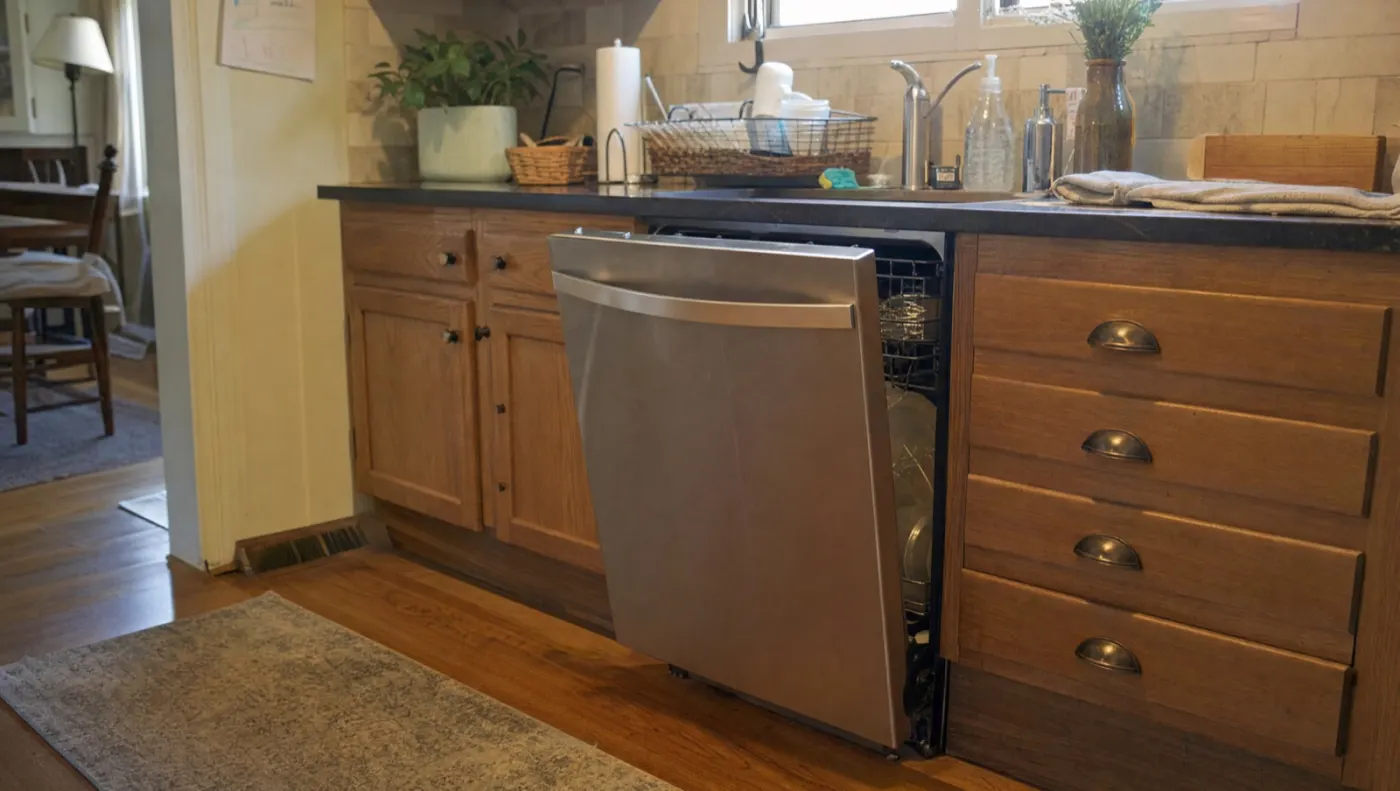
Standing water at the bottom of your dishwasher means the drain cycle ran and the water stayed put. Before you diagnose anything, know what normal looks like. A shallow film of clean water in the sump, maybe a cup of it, is by design on plenty of Bosch and Samsung machines and keeps the pump seal wet. Dirty water sitting above the filter after a finished cycle is the problem you came here for.
People search for how to force a dishwasher to drain, and there is a real answer.
- Run the garbage disposal for 30 seconds with hot water flowing at the kitchen sink. That clears the most common blockage before you touch the dishwasher.
- Press Cancel, or Start slash Cancel on older control panels, and shut the door. Most models answer with a drain cycle of roughly 2 minutes.
- If the water level hasn’t moved, cut the power at the breaker. A dishwasher holds line voltage at the pump, and you’re about to put your hands in the sump.
- Bail the tub with a plastic cup, then sponge the last 1/2 inch dry so you can see the drain and the filter.
- Twist the filter out, rinse it under warm water with a soft brush, seat it back, and run a short cycle to check whether the water flow came back.
That sequence closes out a real share of the machines people call us about, and it costs a Saturday morning and nothing else. If the tub fills again, the drain path has more stops on it.
Bail it, clear the filter, then decide.
The Eight Places A
Dishwasher Drain Gets Stuck
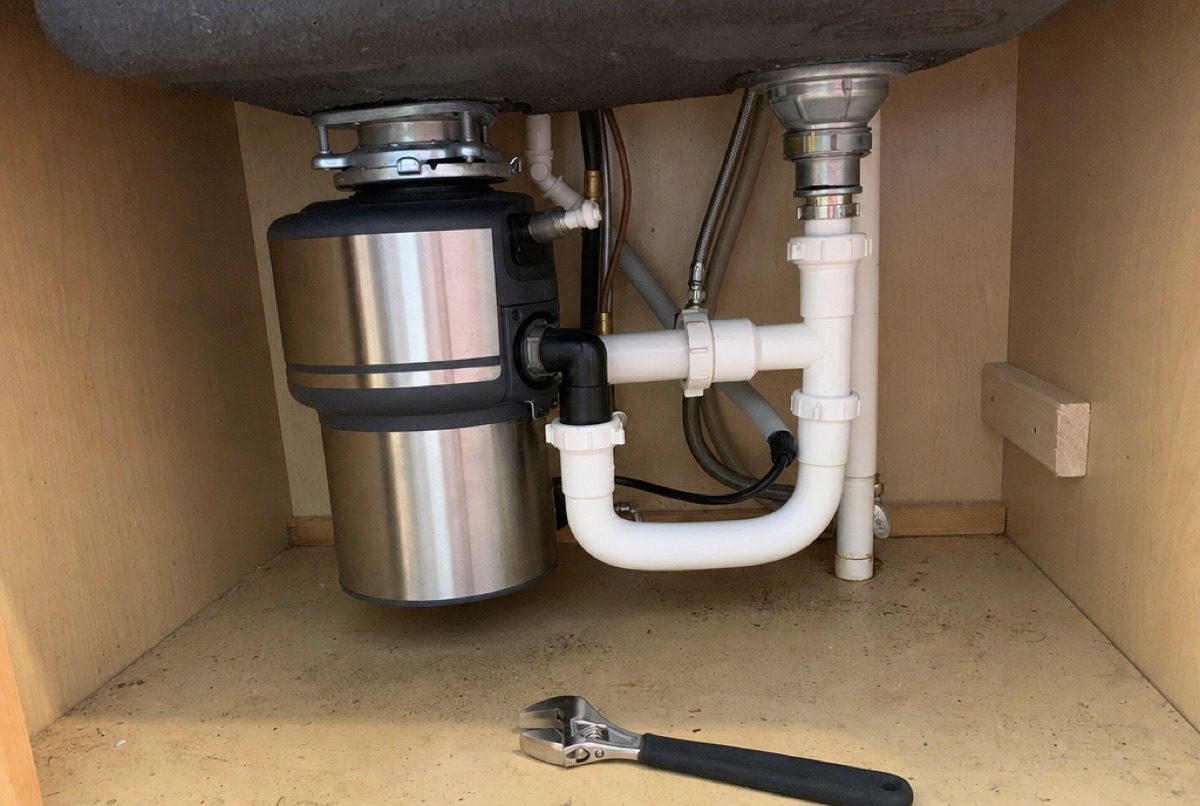
Open each one for what it looks like and what to do about it. They run in the order our techs work them across Baltimore County, cheapest and safest first, and the last 3 need a meter and a machine on its back.
DIY A knockout plug left in a new garbage disposal
Every new garbage disposal ships with a solid plastic knockout plug sealing the dishwasher inlet, and the installer has to punch it out with a screwdriver and a hammer before the dishwasher drain hose is connected. Miss that step and the drain hose dead ends against a wall of plastic. The pump runs, the water goes nowhere, and you get standing water at the bottom of the tub at the end of every cycle.
So if the disposal was installed in the last few weeks and the dishwasher quit draining that same week, start here before anything else. Unplug the disposal, pull the drain hose off the inlet nipple, and look inside with a flashlight. A punched plug leaves an open hole about 7/8 of an inch across, roughly the width of a nickel. A knockout plug still in place looks like a smooth plastic floor.
DIY A clogged filter at the bottom of the tub
The filter sits under the lower spray arm at the bottom of the dishwasher, and on most machines built since about 2010, Bosch and KitchenAid and Whirlpool included, it twists out by hand. Food debris packs into the mesh over months of use, water flow through the drain slows to a trickle, and dirty water sits where the filter used to let it through.
Pull the bottom rack, twist the cylinder counterclockwise, lift it out with the flat screen underneath, and rinse it under warm water with a soft brush and a little dish soap. Nothing sharp, and nothing abrasive. Seat it back until it locks, because a filter that isn’t fully seated lets food particles straight into the drain pump.
DIY A clogged or kinked drain hose
The drain hose is a corrugated rubber line that runs from the drain pump, up behind the cabinet, and over to the disposal or the sink drain. Grease and food particles build up inside the corrugations, and the ridges hold onto everything that passes. A run of 6 feet or more is normal, and a hose can get pinched flat when somebody slides the dishwasher back into the cabinet or shoves a bin under the sink against it.
Check the drain hose where you can see it, under the sink and behind the toe kick, and straighten any kink you find. A clogged section usually feels stiff and heavy when you squeeze it. Clearing one properly means pulling both ends and flushing it out, which is where most homeowners hand the job over.
DIY No high loop, or a plugged air gap
Dishwashers rely on one of two things to keep sink water from siphoning backward into the tub: a high loop, where the drain hose is strapped up under the countertop before it drops to the disposal, or an air gap, the small chrome cylinder on the back of the sink deck. Maryland kitchens have both styles, and plenty of older Baltimore rowhouse installs have neither.
An air gap clogs with the same gunk the drain hose does. Twist off the chrome cover, lift the plastic cap underneath, and clear the chamber with a bottle brush. A bottle brush and 2 minutes clears it, and the chrome cap hides how fast it packs up. Water spitting out of the air gap onto the counter during a wash cycle is the classic sign that the line between the air gap and the disposal is blocked.
DIY A jammed or clogged garbage disposal
A dishwasher that empties into a garbage disposal can only drain as fast as the disposal lets it. Ground food sitting in the chamber, a jammed flywheel, or a clog in the elbow below turns the disposal into a plug at the end of the dishwasher drain.
Run the disposal for 30 seconds with hot water flowing at the kitchen sink, then start a fresh drain cycle. If the disposal only hums, our guide to a garbage disposal humming but not spinning walks the safe unjam sequence, and garbage disposal repair in Baltimore covers the units that are past unjamming.
Pro A failed drain pump, or a foreign object in the impeller
The drain pump pushes the used water out of the sump and into the drain hose, and it’s the part that moves the water. A pump motor can burn out, its impeller can crack, and a fruit pit, a shard of glass, or a twist tie can wedge in the vanes and stall the whole thing. A pump straining against an obstruction usually buzzes or grinds for 3 or 4 seconds during the drain cycle, then goes quiet.
Reaching the drain pump means pulling the machine out, laying it on its back, and separating the sump housing. There’s line voltage at the pump and standing water in the tub, so this one belongs to a technician with the machine isolated at the breaker.
Pro A stuck check valve
Many dishwashers have a drain valve, or check valve, sitting at the pump outlet. Its only job is to stop dirty water from flowing back into the dishwasher once the pump shuts off. When the flapper sticks open, the tub refills itself from the drain line and you find water in the bottom an hour or 2 after the cycle ended.
A check valve stuck shut does the opposite and blocks the drain path completely. Either way the part is buried in the pump assembly, and diagnosing it takes the machine apart, so it’s a service call and not a Saturday project.
Pro A control board or drain solenoid fault
When the drain path is clear and the pump is good, the remaining suspects are electrical. The control board has to command the drain cycle, and on some models a drain solenoid has to open a valve for that to happen. A failed relay on the board or an open solenoid winding leaves the pump sitting there with no signal, so the machine finishes its cycle with a full tub and no error at all.
This is meter work. A technician checks for 120 volts at the pump during the drain portion of the cycle, and that single reading decides whether the fault is the pump or the board driving it. Guessing with parts is how a modest repair turns expensive.
One pattern is worth naming before you start pulling things apart. The DIY causes all block the drain path, while the pro causes break the machine that moves the water. So if clearing and flushing changes nothing at all, the fault has moved inside the dishwasher, and that’s where a diagnosis earns its money.
Tell Us What The Dishwasher Is Doing
Standing water, a humming pump, water backing up into the sink: describe it and our support team follows up to confirm your weekday appointment, often within 48 hours.
- $100 for an expert visit and a full diagnosis
- Factory-certified techs, weekday appointments
- 60-day warranty, plus your $100 back if we find nothing wrong
- Hours
- Mon-Fri, 9am-5pm
- Service area
- Greater Baltimore and five surrounding counties, based in Dundalk
Prefer to book now? Schedule online or call (443) 678-8144.
Draining Poorly With
No Blockage Anywhere?
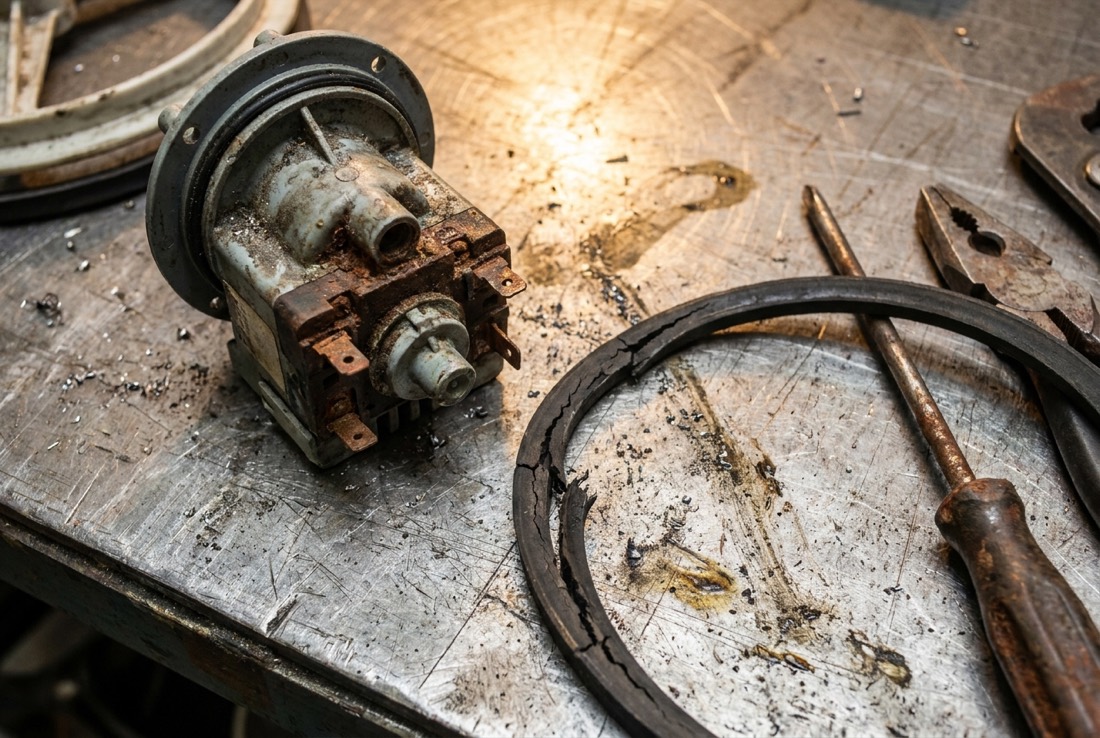
A dishwasher usually stops draining properly before it stops draining at all. A clear drain path and a tub that still won’t empty points at the pump or the electronics behind it. Four faults produce that exact picture, and none of them leaves anything for you to find with a flashlight.
Three mechanical faults you can’t see
The first is a drain pump that spins without moving water, usually a cracked or worn impeller. You hear the pump run for its normal 30 seconds and the level barely drops. The second is a check valve stuck open, which lets the water the pump just moved run straight back into the dishwasher, so the tub is full again an hour later. The third is a sagging drain hose. Water pools in the low spot, never fully clears, and the machine drains a little worse every month, which is the slow version we see most in Dundalk and Essex rowhouses.
And one that leaves no trace at all
The fourth is electrical. A control board that never commands the drain cycle, or a drain solenoid that won’t open, leaves a perfectly healthy pump sitting idle. Nothing sounds wrong, no error code appears on plenty of models, and the tub is simply full at the end. A technician settles it with one voltage reading at the pump during the drain portion of the cycle. When a code does appear, an LG reports a drain fault as OE, and our page on repairing an LG dishwasher lists the rest of LG’s codes.
No clog and no drainage points at the machine.
How To Keep The
Drain System Clear
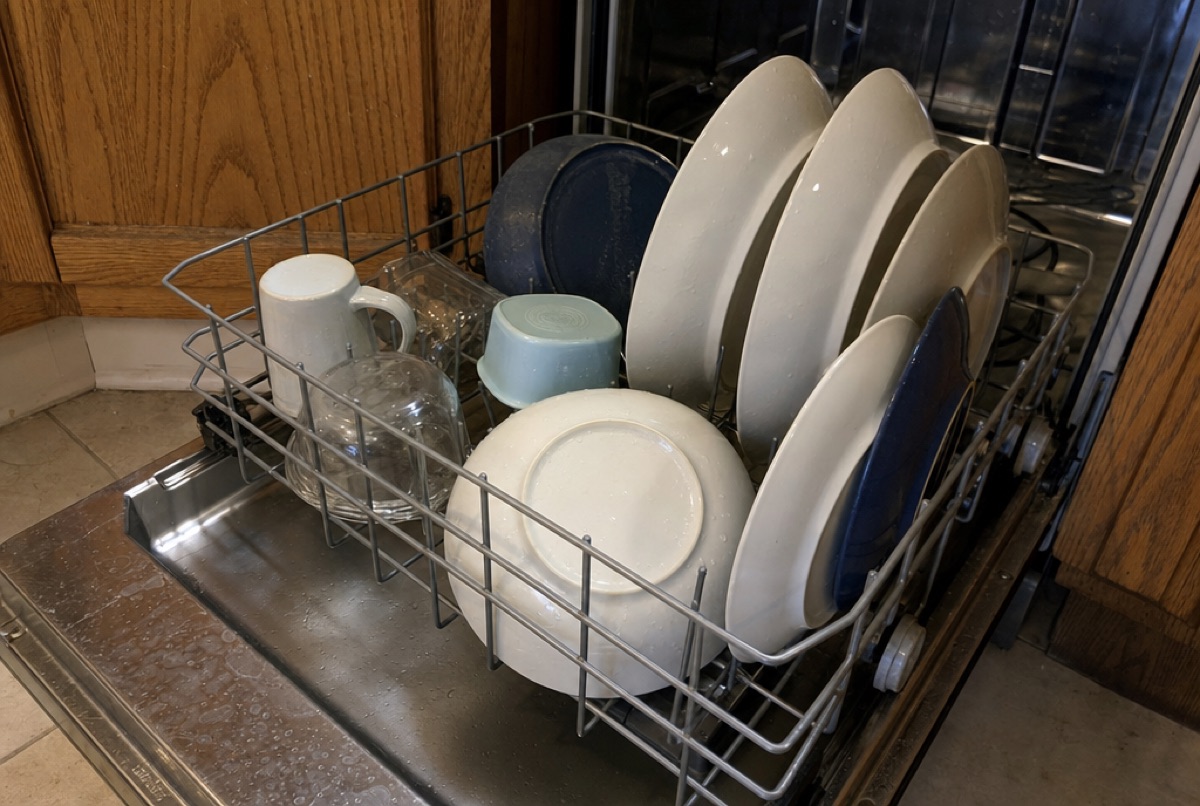
Most of the dishwasher drainage issues we get called out for build up slowly, over a year or two of ordinary use. Six habits keep the drain system clear, and none of them takes more than a minute.
- Scrape plates into the trash before they go in. Skip the full pre rinse, since detergent needs something to work on, and scraping is what keeps food particles out of the filter.
- Clean the filter monthly. Warm water, a soft brush, 30 seconds, back in place.
- Run hot water at the kitchen sink until it runs hot before you start a wash cycle. The dishwasher pulls its first fill from that line.
- Run the garbage disposal every time before you start the dishwasher, so the drain the hose empties into is already clear.
- Use the right detergent and the right amount. Too much suds slows drainage and leaves film on the tub and the spray arms.
- Check the drain hose after anyone slides the machine out. A kink from a repair or a floor job is easy to leave behind and easy to spot.
Skip the drain cleaners. Baking soda and vinegar are fine for odor, and the harsh chemical products are hard on the pump seals and the plastic sump they sit against. A brush and hot water do more for a dishwasher drain than anything you can pour into it.
When It Needs
The $100 Diagnosis
Anything past the filter, the air gap and the disposal calls for the machine to come out of the cabinet. The drain pump, the check valve, the drain solenoid and the control board all sit behind panels, all carry line voltage, and all sit next to a tub with water in it. That combination is why the back half of this list is a service call.
The visit starts at $100, and that covers a real diagnosis rather than a look and a shrug. A dishwasher technician works the whole drain path, finds the actual fault, and if a special order part is needed our office prices it exactly and books the follow up. You approve one flat price before any repair happens, and the work leaves with a 60-day warranty on parts and labor.
Find nothing wrong, and your $100 comes back.
We’ve been at this since 2011, more than 10,000 repairs across Baltimore City plus Baltimore, Anne Arundel, Harford, Howard and Carroll counties and Frederick, and today we work out of our shop in Dundalk, with a 4.6 star average across 251 Google reviews. Weekday appointments, Monday through Friday, often within 48 hours. For everything else dishwasher shaped, from a machine that won’t clean to one that leaks at the door, start with dishwasher repair in Baltimore. If the disposal under the sink is the part giving you trouble, garbage disposal repair in Baltimore covers that side of the cabinet.
 60-second quiz
 Fix The Dishwasher, Or Replace It?
Answer eight quick questions about your dishwasher. We weigh the age, the problem, and the cost, then tell you whether a repair is worth your money.
Dishwasher Drain Questions,
Answered
Why is there standing water at the bottom of my dishwasher?
Standing water at the bottom of your dishwasher means the machine could not push the last of the wash water out through the drain path. The blockage is usually the filter, the drain hose, the air gap, or the garbage disposal the hose empties into. A small amount of clean water sitting in the sump is normal on many models and keeps the seals from drying out. An inch of dirty water after a finished wash cycle is not.
How do you fix a dishwasher that won’t drain?
Work the drain path in order, from the tub outward. Clear the filter at the bottom of the tub, run the garbage disposal, check the air gap on the sink deck, then check the drain hose for a kink or a clog. Those four checks cover the majority of the calls we get for a dishwasher not draining. If the dishwasher still won't drain after all four, the fault is the drain pump, the check valve, or the control board, and that needs a technician with a meter.
How do you force your dishwasher to drain?
Press Cancel, or Start slash Cancel on older panels, then shut the door. Most dishwashers answer that by running a drain cycle of about two minutes on their own. If the water level doesn’t move, cut power at the breaker, bail the tub out with a cup, sponge up the last of it, and pull the filter. Never bail a dishwasher with the door latch closed on a running cycle.
Why isn’t my dishwasher draining even though there’s no blockage?
A clear drain path with a full tub points at the pump or the electronics behind it. The drain pump can spin with a cracked impeller and move almost nothing, a check valve can stick open and let water run back into the dishwasher, and a control board can finish the cycle without ever commanding the drain. Weak drainage with no visible clog is also what a sagging drain hose does, since water pools in the low spot and never clears.
Why is my new dishwasher not draining?
Nine times out of ten a brand new dishwasher that won’t drain is connected to a garbage disposal whose knockout plug was never punched out. The plug is a solid disc of plastic sealing the dishwasher inlet, and it has to be knocked through with a screwdriver during the install. The second most common install fault is a drain hose run flat along the floor with no high loop, which lets sink water siphon back into the tub.
Can a garbage disposal stop a dishwasher from draining?
Yes. On most Baltimore kitchens the dishwasher drain hose empties into the side of the garbage disposal, so anything blocking the disposal blocks the dishwasher too. Ground food packed in the chamber, a jammed flywheel, or the unpunched knockout plug on a new unit will all leave standing water in the dishwasher. Running the disposal with hot water for thirty seconds before you start a wash cycle is a free habit that prevents a lot of drainage issues.
What does the air gap on the sink do?
The air gap is the small chrome cylinder mounted on the sink deck, and it breaks the siphon between the dishwasher drain hose and the sink drain so dirty water can never be pulled back into the dishwasher. It clogs with grease and food debris the same way the hose does. Water bubbling up around the air gap during a cycle means the line running from the air gap down to the disposal is blocked.
How often should I clean the dishwasher filter?
Once a month is the honest answer for a household that runs the dishwasher most days, and every 2 or 3 months for lighter use. Twist the filter out, rinse it under warm water with a soft brush, and put it back. Five minutes of filter cleaning prevents most of the food particles that would otherwise reach the drain pump, and a clogged filter is the single most common cause we find on machines that are draining slowly instead of not at all.
Is it safe to run the dishwasher with water in the bottom?
Running a fresh cycle over standing water is safe for one attempt, since the machine will try to drain before it fills. What it won’t do is clean anything, because the fresh water mixes with the dirty water already sitting in the tub. Repeated attempts push more food debris into the drain pump and can burn out a pump that is already straining, so stop after one try and clear the filter.
Will baking soda and vinegar unclog a dishwasher?
Baking soda and vinegar clean odors and light film, and they do very little to a real clog. The fizz has no force behind it, so it can’t move a plug of grease in a corrugated drain hose or a knockout plug in a disposal. Skip the chemical drain cleaners entirely on a dishwasher, because they sit against the pump seals and the plastic sump and can do damage a clog never would.
How much does it cost to fix a dishwasher that won’t drain?
Fixing a dishwasher drain problem starts at $100 for the visit and the full diagnosis, and if we find nothing wrong you get that $100 back. A standard repair with the part on hand comes to $225 total, and the $100 you paid to book is the first of those two payments rather than a charge on top. Special order parts get an exact quote from our office before any work begins, and every repair carries a 60-day warranty on parts and labor.
Book The Weekday
Dishwasher Visit
Tell us what you already checked and the tech starts where you stopped. You’ll have one flat price to approve before any work begins, and the full breakdown lives on our appliance repair cost in Baltimore page. Call or text if you’d rather talk it through first.