
The Appliance Maintenance Checklist
For Baltimore Homes
Most appliance breakdowns don't come out of nowhere. They build for months, in coils nobody vacuums and vents nobody clears. Here's the monthly, seasonal, and yearly routine we'd tape to our own refrigerators, plus the symptoms that mean put the sponge down and call a tech.
Hablamos Español
Since 2011 · 10,000+ repairs · 60-day warranty
Ten Minutes A Month
Is The Whole Secret
A good appliance maintenance checklist boils down to about ten minutes of cleaning each month, a deeper pass when the season changes, and a handful of annual tasks, and this guide lays out all of it. We're Doctor Maintenance, the appliance repair team working out of Dundalk, with 10,000+ repairs across the Greater Baltimore area since 2011, and this is the same routine upkeep we'd hand our own neighbors. Nothing to buy, either. Most homeowners already own everything the list requires: a vacuum, dish soap, white vinegar, and a screwdriver.
An appliance maintenance checklist is a recurring set of cleaning and inspection tasks, organized by month, season, and year, that keeps your refrigerator, washer, dryer, dishwasher, oven, and garbage disposal in working order. That's the textbook version. In plainer terms: it's the fridge-door list that stops small, boring issues from growing into loud, expensive ones.
The short version
- Monthly: clean the dishwasher filter, wash the lint screen, wipe the washer gasket, test the fridge door seals.
- Seasonally: vacuum refrigerator coils, degrease the range hood filter, inspect washer hoses for cracks.
- Annually: clear the full dryer vent run and flush the water heater.
- Homes with pets tackle the coil and filter tasks about twice as often.
- Stop when a symptom outlasts the cleaning. A $100 visit buys a full diagnosis and the real answer.
The checklist breaks the year into monthly quick checks, seasonal passes, and a few annual tasks, because Baltimore hands your machines a different job every quarter. Print the full table below, pin it up, and cross things off. And when a task turns up a symptom instead of dust, stop there. That's the moment a $100 diagnosis pays for itself.
Ten minutes a month beats a dead compressor.
What Should You Check
Every Month?
Six tasks. None takes longer than brewing coffee, and you can knock out the whole circuit in one lap of the kitchen and laundry room. Set a reminder for the first Saturday of the month and let the habit do the worrying. Ten minutes of checking beats an afternoon of mopping.
Clean The Dishwasher Filter
Twist it out of the tub floor, rinse it under hot water, scrub the screen with an old toothbrush. Gritty glasses almost always start here, not with the detergent.
Wash The Lint Screen
Clear it every load, then wash it monthly with dish soap. Dryer sheets leave a film that chokes airflow even when the screen looks perfectly clean.
Test The Fridge Door Seals
Close the door on a dollar bill. If it slides out with no drag, the gasket is leaking cold air, and your fridge is quietly running overtime to make up for it.
Wipe The Washer Gasket
Pull back the rubber fold on a front-loader and dry it out. That's where mildew starts, and it's the reason towels come out of a clean machine smelling musty.
Freshen The Disposal
Grind a handful of ice cubes, then a citrus peel. The ice knocks grime off the grind ring, the peel handles the smell, and the drain line stays clear.
Test Smoke And CO Detectors
One button, ten seconds, and the house sleeps safer. If you cook on gas, the carbon monoxide detectors earn their spot on an appliance checklist. Replace batteries when the clocks change.
A Season-By-Season Appliance
Maintenance Checklist
Baltimore doesn't do gentle seasons. July humidity off the harbor makes a refrigerator sweat and strain, and a February cold snap can idle a garage freezer or split a neglected washer hose. The checklist changes with the seasons because the stress on your appliances does.
Spring
Deep-clean season
- Vacuum refrigerator coils with a brush attachment. A winter of dust and pet hair chokes them.
- Run a hot white vinegar cycle through the dishwasher and the washer to cut mineral buildup.
- Inspect washer hoses and fittings for cracks, bulges, or corrosion, and confirm the machine sits level.
- Pull the fridge out, sweep behind it, and deep clean the shelves. Crumbs back there invite pests, and dust piles up on the coils.
Summer
Humidity season
- Give the refrigerator breathing room. It sheds heat through its coils, and a packed, wall-pinned fridge can't.
- Re-run the dollar-bill test on every door seal. Humid air makes each gap pricier to keep cold.
- Check on the garage fridge. A garage that hits 95 degrees works a compressor double.
- Keep the ice maker cycling. Stagnant lines lead to stale, hollow ice.
Fall
Oven season
- Check the oven door seal and hinges before holiday cooking, and verify temps with a $10 oven thermometer.
- Soak and degrease the range hood filter. A season of cooking oil is a fire hazard parked over the burners.
- Clear the full dryer vent run, or have it done, before flannel-and-blanket laundry season.
- Walk the laundry room and kitchen once with a flashlight. Leaks, rust, and kinked hoses hide in plain view.
Winter
Freeze season
- Watch garage units once freezing temperatures settle in. Below about 40 degrees, a single-thermostat fridge can stop cooling its freezer side, the garage case in our freezer not freezing causes guide.
- Inspect washer supply lines and exposed pipes in unheated rowhome basements during hard cold snaps. Cold rubber cracks first.
- Disconnect hoses at the outdoor spigots before the first freeze, while you're already thinking about water lines.
- On cold mornings, run the kitchen tap hot before starting the dishwasher so it washes at full temperature.
Dust and lint are patient. They win by being ignored.
The Complete Checklist,
One Table
Here's the complete appliance maintenance checklist in one place. Screenshot it, print it, stick it on the fridge it protects. Keep in mind these frequencies are the minimum for most homeowners; homes with pets should double the coil and filter entries, because fur finds its way into everything that moves air.
| Task | How often | What it prevents |
|---|---|---|
| Vacuum refrigerator coils | Twice a year (quarterly with pets) | An overworked compressor and higher energy costs |
| Test fridge door seals with a dollar bill | Monthly | Leaking cold air and a fridge that runs nonstop |
| Replace the fridge water filter | Every 6 months | Off-taste water and slow ice production |
| Clean the dishwasher filter | Monthly | Gritty dishes and standing water in the tub |
| Run a hot white vinegar cycle | Monthly | Mineral buildup, detergent film, and odors |
| Wash the dryer lint screen with dish soap | Monthly (clear it every load) | An airflow-choking film and longer dry times |
| Clear the full dryer vent run | Annually | Lint fires and two-cycle drying |
| Inspect washer hoses and fittings | Quarterly | Burst hoses, water damage, and basement flooding |
| Wipe the washer door gasket dry | Monthly | Mold, mildew, and musty towels |
| Grind ice cubes and citrus in the disposal | Monthly | Grime on the grind ring, slow drains, and clogs |
| Check the oven door seal and hinges | Twice a year | Escaping heat and uneven baking |
| Degrease the range hood filter | Quarterly | A grease fire hazard above the burners |
| Test smoke and carbon monoxide detectors | Monthly (replace batteries yearly) | The worst-case scenario |
| Flush the water heater | Annually | Sediment buildup and lukewarm water |
Fourteen rows, and not one needs a spare part or a power tool. Fall is the ideal window for the annual tasks, so tackle them in one Saturday before the holidays. And if a row keeps failing no matter how often you clean, that's no longer a maintenance issue. It's a repair, and catching it early keeps repair costs small and the repair budget intact.
Every row on that table costs less than the repair it prevents.
What Does Appliance Maintenance
Actually Prevent?
Four things, mostly. Fires, floods, bloated utility bills, and appliances that die young. Understand those four and the chore starts reading like insurance.
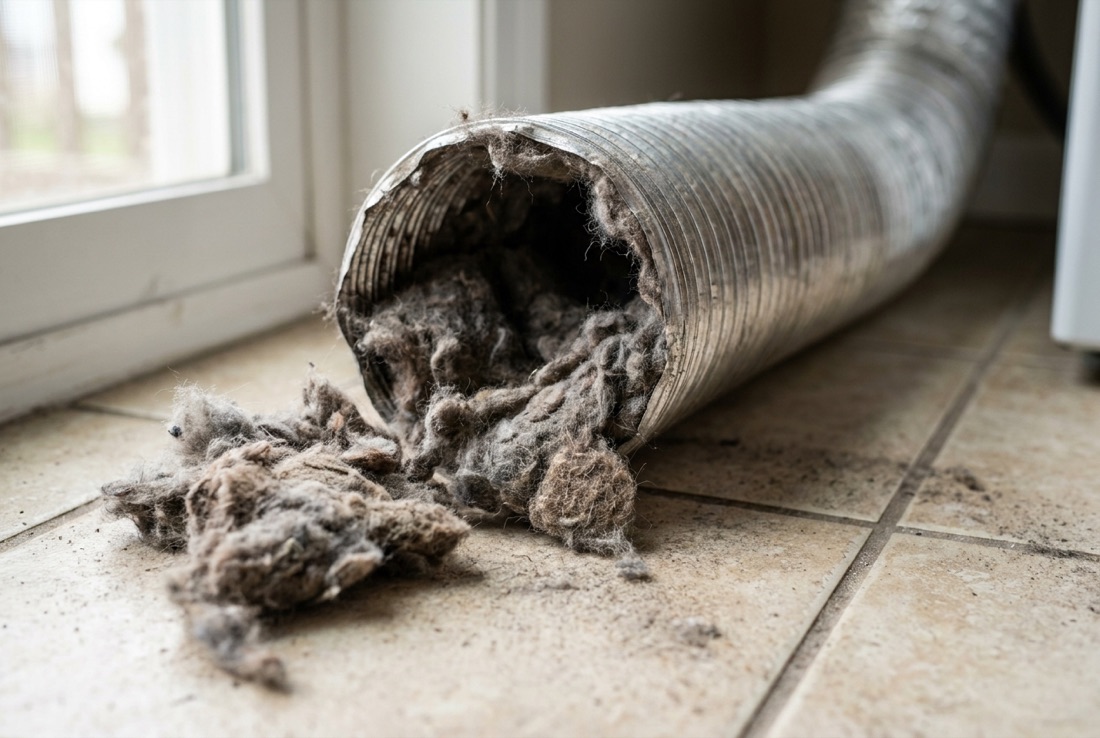
Start with fire. Lint buildup in a dryer vent is fuel sitting next to a heat source, and clogged vents sit behind a large share of appliance house fires. The range hood tells the same story with grease instead of lint. Between the lint screen wash, the annual vent clearing, and a quarterly hood filter soak, this checklist takes the appliance side of fire safety off the table for the cost of dish soap.
Water damage is the sneakier one. Washer hoses are a classic source of home insurance claims, because a split hose doesn't drip politely. It floods, soaking the laundry room and whatever sits below it, and Baltimore homeowners with rowhome basement laundry from Dundalk to Towson know that story too well. A quarterly hose inspection takes two minutes. So does a glance under the dishwasher and behind the fridge for moisture, which is how you catch a slow water line leak before the floor does. Most water damage issues announce themselves quietly first, in a drip you'd only spot by looking.
Then there's the slow bleed. Caked coils and starved vents force motors to run long, energy costs creep month over month, efficiency slides, and parts wear out years ahead of schedule. Most major appliances are built for roughly 9 to 15 years of service, and steady upkeep is often the difference between reaching that range and replacing a four-figure unit in year six, at half its expected life. Protecting the investment costs you minutes. When a machine does start failing, our appliance repair vs replace guide walks the math, and the repair-or-replace quiz gives you a read in about a minute.
One caveat, because it matters: a checklist maintains, it doesn't fix. A dryer that still takes two cycles after the vent's been cleared has a worn part, not a lint problem, and that's dryer repair in Baltimore territory. Same logic for a washer leaking from underneath rather than the door. Gasket wipes won't touch a failing pump, so washing machine repair is the right call before the floor pays for the delay.
How Does This Fit Your
Home Maintenance Checklist?
It's one chapter of a bigger book. A full home maintenance checklist runs the whole property, gutters to foundation, and a summer home maintenance checklist will hand you a power washer and point you at the deck. Ours keeps you inside. Some of the most important home maintenance tasks never leave the kitchen and laundry room, and they belong to the machines that work every single day.
Two neighbors of this list deserve a spot on the same calendar. Flush the water heater annually, since sediment buildup steals capacity and shortens its life, and swap the furnace filter every month or two during heating season, because dirty HVAC filters make the whole HVAC system labor. Toilets, sinks, faucets, and the pipes between them sit on the plumber's side of the ledger. We stay in our lane, and the lane is appliances.
 60-second quiz
 Repair It, Or Replace It?
Answer eight quick questions about the appliance. We weigh its age, the fault, and the repair cost, then give you a straight answer on whether fixing it is worth the money.
When Should You Stop
And Call A Tech?
A checklist keeps a healthy machine healthy. It can't revive a failing one, and pushing DIY past that line usually turns a small repair into a bigger one. Knowing when to quit saves money every time. Stop cleaning and pick up the phone when:
- A burning smell comes off the dryer even after the vent and lint screen are clean.
- The fridge runs warm, or runs nonstop, after the coils have been vacuumed.
- The dishwasher holds standing water behind a freshly rinsed filter.
- The washer leaks from underneath, not from the door gasket.
- The disposal hums but won't turn, even after the reset button and the hex-key wiggle.
- Any appliance trips a breaker when it starts. And if you ever smell gas, step outside and call BGE first.
Those symptoms point at parts, not dirt: compressors, pumps, heating elements, control boards. In this business, the symptom is rarely the whole story, and finding the true cause is what our techs do all day across our Greater Baltimore service area, from refrigerator repair in Baltimore and dishwasher repair service to a Dundalk disposal that quit mid-rinse.
The visit starts at $100, which covers a full diagnosis, and if we find nothing wrong, you get the $100 back. You approve one flat repair price before any work begins, every repair carries a 60-day warranty on parts and labor, and our techs are factory certified for LG, GE, Dacor, and Broan. Weekday appointments, often within 48 hours. And 4.6 stars across 251 Google reviews says the arrangement holds up.
You handle the upkeep. We handle the repairs.

Tell Us What It's Doing
Describe the symptom and our support team follows up to confirm your weekday appointment. You get a full diagnosis and one flat price to approve before any work begins.
- $100 for an expert visit and a full diagnosis
- Factory-certified techs, weekday appointments
- 60-day warranty, plus your $100 back if we find nothing wrong
- Hours
- Mon-Fri, 9am-5pm
- Service area
- Greater Baltimore and five surrounding counties, based in Dundalk
Prefer to book now? Schedule online or call (443) 678-8144.
Appliance Maintenance Checklist
Questions, Answered
What should be on an appliance maintenance checklist?
Six machines do the heavy lifting: the refrigerator, washer, dryer, dishwasher, oven or range, and the garbage disposal. For each one you’re cleaning a filter, checking a seal, and keeping airflow clear on a set schedule. Add the range hood, the ice maker, and a monthly smoke and carbon monoxide detector test, and you’ve covered the appliances behind most home headaches. The table in this guide lays out every task with its frequency.
How often should you clean refrigerator coils?
Twice a year for most homes, and closer to quarterly if you’ve got pets. Coils caked in dust and fur can’t shed heat, so the compressor runs longer, energy costs climb, and the fridge ages faster than it should. Unplug the unit, pop the base grille, and vacuum with a brush attachment. An easy ten minutes, start to finish.
How often does a dryer vent need to be cleaned?
The full vent run should be cleared annually, and the lint screen every single load. Lint buildup is a genuine fire hazard, and clogged dryer vents sit behind a large share of appliance house fires. If clothes take two cycles to dry or the laundry room turns hot and muggy mid-cycle, don’t wait for the annual date.
What maintenance does a dishwasher need?
A monthly filter rinse, a monthly hot cycle with white vinegar, and a quick check that the spray arms and rack rollers still spin and work properly. Twist the filter out of the tub floor, rinse it under hot water, and scrub the screen with an old toothbrush. Wipe the door gasket while you’re in there. That routine prevents gritty glasses, standing water in the tub, a sluggish drain, and most of the odors people blame on their detergent.
Do old appliances need a different maintenance checklist?
No, the tasks are the same. The stakes just get higher. An older unit has less margin, so a choked coil or a clogged vent pushes it toward failure faster than it would a newer one. Keep up the routine, and when an aging appliance starts needing repairs, weigh the fix against its remaining lifespan before you spend.
Does the checklist change by brand?
Barely. A household appliance maintenance checklist works across brands because the parts doing the failing, the seals, filters, coils, and vents, are close to universal. Your owner’s manual may add a model-specific task or two, and it’s worth the skim. When a repair does come up, we’re factory certified for LG, GE, Dacor, and Broan, and we work on the rest of the major brands too.
What’s the difference between an appliance maintenance checklist and a home maintenance checklist?
Scope. A home maintenance checklist covers the whole property, roof to foundation. An appliance maintenance checklist zooms in on the machines: the refrigerator, the laundry pair, the dishwasher, the oven, and the disposal. The appliance list is faster, most of it runs monthly, and skipping it tends to cost you sooner, because these machines work every single day.
Can appliance maintenance really prevent house fires?
Appliance maintenance removes the most common fuel, so yes, it lowers house fire risk in a real way. Lint buildup in dryer vents and grease in range hood filters are the two big offenders, and both sit on the monthly-to-quarterly part of this checklist. Pair that with working smoke and carbon monoxide detectors and you’ve covered the appliance side of fire safety.
Does maintenance actually make appliances last longer?
Yes, within honest limits. Clean coils, clear vents, and healthy seals keep parts running at full efficiency instead of working overtime, which is what shortens their life. Wear and tear still wins eventually, and no routine will carry a 15-year-old washer to 30. But steady upkeep reliably helps a machine reach the far end of its expected lifespan instead of quitting early, and that difference is measured in years, not months.
When should I stop DIY maintenance and call a technician?
The moment a symptom survives the cleaning. A fridge that still runs warm after the coils are vacuumed, a dryer with no heat, a washer leaking from underneath, a disposal that hums and stops. Those point to failing parts, not dirt, and that’s where the line sits: cleaning is your job, opening the machine up is ours.
What does it cost if the checklist turns up a real problem?
A repair from a checklist problem starts at $100 for the visit and a full diagnosis, and if we find nothing wrong, you get the $100 back. A standard repair with the part on hand is finished that visit, $225 total, which is almost always far less than replacing the appliance. For special-order parts, the office sends an exact quote for you to approve before any work. Either way, the repair carries a 60-day warranty on parts and labor.
Is it worth hiring someone to do routine appliance maintenance?
For most of this list, no. Nearly every task takes minutes and needs nothing beyond a vacuum, dish soap, and vinegar, so keep that money. The full dryer vent run is the one job worth handing off if yours snakes through walls or a long rowhome ceiling. Our lane is repair: when a symptom shows up that upkeep can’t fix, that’s when you call us.
Put The Checklist
On The Fridge
Start with the monthly six this weekend, because homeowners who plan ahead get to skip the dramatic part. And when a symptom outlasts the cleaning, take the repair-or-replace quiz for a quick read, learn what a visit runs on our pricing page, or book the diagnosis and get the real answer from a certified tech.