
Freezer Not Freezing? The Likely Causes, In Order
A freezer not freezing is usually caused by a bumped temperature setting, blocked air vents, dirty condenser coils, or a freezer door gasket that quit sealing. Below, all eight causes ranked, the safe DIY checks, and the food clock.
Hablamos Español
Since 2011 · 10,000+ repairs · 60-day warranty
Why Isn't My Freezer Freezing?
Start Here
A freezer isn't freezing when it can no longer hold 0 F, the freezer temperature FDA and USDA food-safety guidance sets for frozen food, and the cheapest checks come first: the setting, the vents, the coils, and the door gasket. Feels cold is not the same as cold enough. If the freezer is not freezing solid after a full day at the right setting, work the map below step by step, shortest checks first.
- Check the freezer temperature setting before anything else. Controls get bumped more than anyone admits.
- Blocked air vents and overpacked freezer shelves choke proper airflow. Rearranging is a free fix.
- Dirty condenser coils make the compressor fight for every degree. A vacuum handles it.
- A worn gasket on the freezer door lets warm air leak in and frost buildup take over.
- Frost-choked evaporator coils, a dead fan motor, or a failing compressor are technician territory.
- A full freezer keeps food safe for about 48 hours without cooling. Don't gamble past it.
Most freezers that stop freezing need a diagnosis, not a replacement.
The Eight Causes Of A Warm Freezer, Ranked
Freezer problems sort themselves into a rough order, and it barely changes from a Towson kitchen to a Dundalk rowhouse basement. Fifteen years of service calls say the boring common causes come first: settings, airflow, dirt. The failures people fear, a broken freezer compressor or a refrigerant leak in the sealed system, sit at the bottom for a reason.
Speed is worth a note, too. A freezer that's been slipping for weeks usually points to frost buildup or a fan losing its grip, while a sudden malfunction overnight leans toward power, a broken start relay, or the compressor itself.
| Cause | What you'll notice | DIY or pro |
|---|---|---|
| Settings or user error | Everything runs, food is cold but soft, the control reads warmer than 0 F | DIY, takes two minutes |
| Blocked air vents or overpacked shelves | Some zones freeze solid while others stay slushy | DIY, rearrange and wait a day |
| Dirty condenser coils | Runs almost nonstop, warm along the sides, freezer cold but not freezing hard | DIY, a vacuum and 20 minutes |
| Worn freezer door gasket | Frost buildup near the freezer door, sweating seams, the paper test fails | DIY to check, quick job for a tech |
| Failed defrost system | Heavy freezer frost buildup on the interior walls, leaking water under the unit, a slow decline over weeks | Technician |
| Evaporator fan motor | No hum from behind the back panel, fridge is cold but the freezer is warm | Technician |
| Control board or thermostat | Temperature swings that ignore the setting, a dead display, fans and compressor that never kick on | Technician |
| Failed compressor, start relay, or sealed system | Clicking sound, long silences, low refrigerant, the unit runs but never gets cold enough | Technician |
| Settings or user errorDIY first | Everything runs, food is cold but soft, the control reads warmer than 0 FDIY, takes two minutes |
|---|---|
| Blocked air vents or overpacked shelvesDIY first | Some zones freeze solid while others stay slushyDIY, rearrange and wait a day |
| Dirty condenser coilsDIY first | Runs almost nonstop, warm along the sides, freezer cold but not freezing hardDIY, a vacuum and 20 minutes |
| Worn freezer door gasketDIY first | Frost buildup near the freezer door, sweating seams, the paper test failsDIY to check, quick job for a tech |
| Failed defrost systemTechnician | Heavy freezer frost buildup on the interior walls, leaking water under the unit, a slow decline over weeksTechnician |
| Evaporator fan motorTechnician | No hum from behind the back panel, fridge is cold but the freezer is warmTechnician |
| Control board or thermostatTechnician | Temperature swings that ignore the setting, a dead display, fans and compressor that never kick onTechnician |
| Failed compressor, start relay, or sealed systemTechnician | Clicking sound, long silences, low refrigerant, the unit runs but never gets cold enoughTechnician |
Work the table from the top down. Each row gets less likely, and more expensive, as you go. Most performance issues live in the top four rows, and the other causes tend to announce themselves with sound or frost. If your symptoms already match the bottom four rows, skip the checklist and schedule the diagnosis, because testing a defrost heater, a control board, or a compressor safely takes tools and training, not courage.
The Checks You Can
Do Yourself
Six quick tips, roughly twenty minutes, nothing more technical than a vacuum and a strip of paper. They resolve the most common causes outright, and you'll learn plenty about the rest along the way. Unplug the freezer before you touch the coils. Everything else is look, listen, and clean.
Read The Set Temperature
The target is 0 F, and the owner's manual lists the recommended freezer temperature for your model. A dial sitting two notches warm explains a soft freezer with no other symptoms. After changing it, give the compartment a full day and judge the result with an appliance thermometer, not the display. And skip the urge to crank the highest setting, cold air can't shortcut physics.
Give The Air Vents Room
Cold air enters through vents along the back or side walls, and frozen meals stacked tightly against them block the flow. Leave a hand's width of space around each vent, the use and care guide shows where they're located, and don't overload the freezer compartment, which helps ensure proper airflow top to bottom. A packed freezer actually runs better than an empty one, but only when air can move through it.
Clean The Coils
Unplug the unit, pull it out for access, and find the condenser coils underneath or behind it. Use a vacuum with its crevice attachment to remove dust wherever it's accumulated, and check that the condenser fan spins freely while you're there. Coils caked in dirt can't dump heat, so the compressor fights for every degree. Clean condenser coils, twice a year, are the closest thing to a free performance upgrade a freezer can get.
Test The Freezer Door
Close the door on a strip of paper and tug. If it slides out with no resistance, the gasket has quit gripping, and every gap lets warm air seep in while cool air spills out. Wipe the door seals with warm soapy water, inspect the corners for tears, and check that nothing on the shelves is keeping the door from closing flush. A door that drifts open on its own means the unit may not be level.
Listen To It
A healthy freezer makes a low humming sound with the occasional click as the compressor cycles. Close the door first, since the door switch cuts the fan while it's open, then listen. Clicking every few minutes means a start relay is trying and failing, and total silence, even with the interior light working, points at the evaporator fan motor. Every sound you hear is a piece of the diagnosis before anyone opens a panel.
Reset After An Outage
Check the breaker first. If turning it back on doesn't wake the freezer, test the outlet with a lamp. Then unplug the unit for five minutes, plug it back in, and allow up to 24 hours for it to pull back down, monitoring with a thermometer rather than your hands. If the freezer is cold and holding by the next evening, it's working. Most freezers have no reset button, so this is the reset.
One boundary. Anything past look-and-clean, meaning wiring, the defrost heater, the control board, refrigerant lines, or the sealed system, typically requires professional tools and belongs to a technician. Refrigerant is pressurized and regulated, and a guessed-at part swap usually costs more than the evaluation you skipped.
These checks cost you nothing. Guessed-at parts cost plenty.
Why Is My Freezer Not Freezing
But The Fridge Is Cold?
It looks backwards, but the refrigerator and freezer share one cooling system, and the freezer is the source of all the cold. The evaporator coils sit behind the freezer's back panel, a fan pulls air across them, and a share of that cold air gets routed to the refrigerator side. The pattern shows up in everything from a basic top-freezer to a stainless steel French door unit.
Frost is the usual culprit. When the auto defrost cycle fails, frost buildup swallows the evaporator coils a little more each day, and excess frost buildup works like a blanket over the freezer's coils. The freezer's ability to make cold fades week by week while the fridge, which needs far less of it, coasts along fine. The second suspect is the evaporator fan itself: if it never spins up, the freezer is unable to move its own cold no matter how hard the compressor works. A failed temperature sensor or a stuck damper can cause the same malfunction, though less often. Often the ice maker quits making ice first, which is the notice most people actually get.
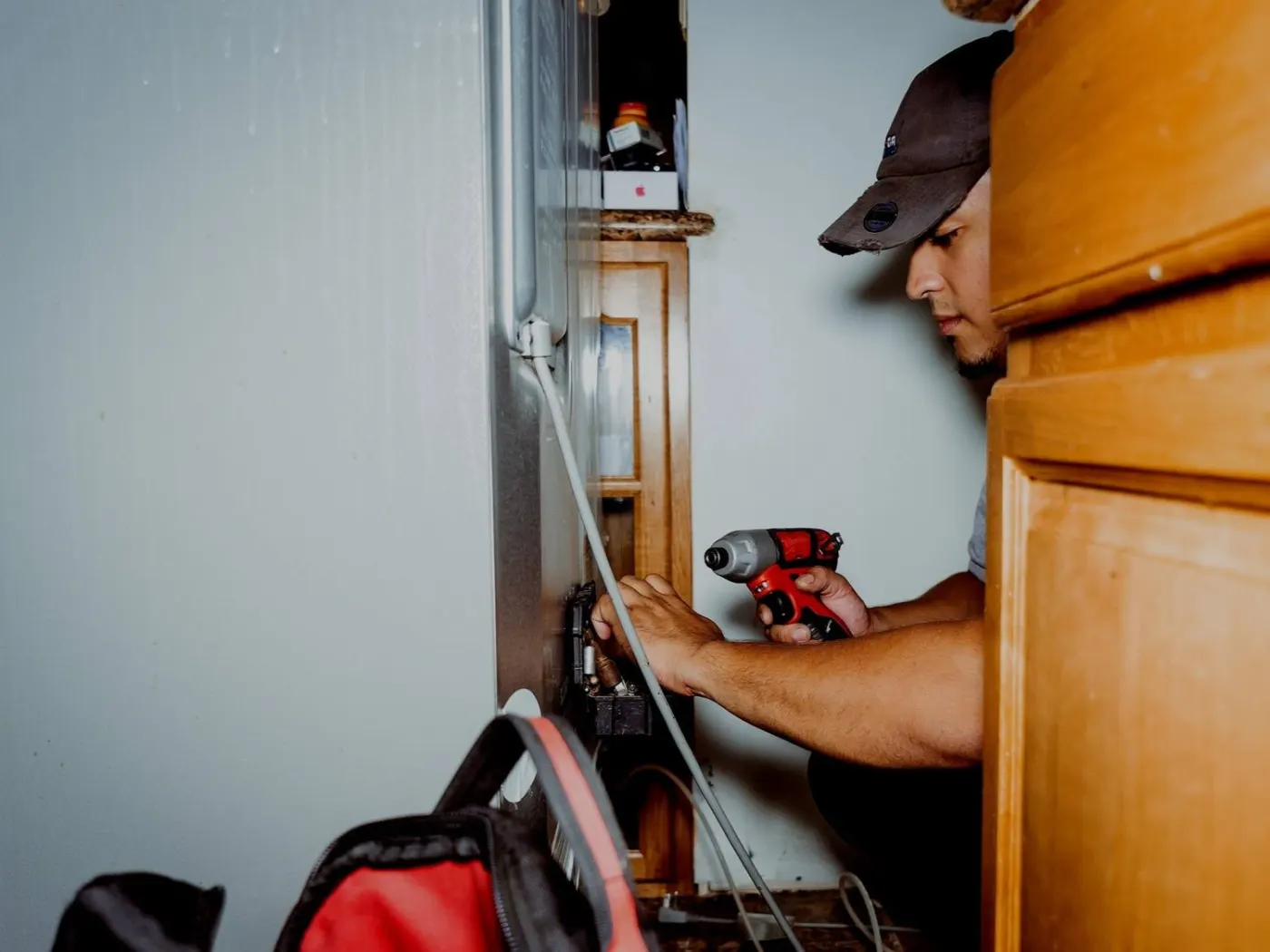
Need the freezer limping along before your visit? A manual defrost is simple and safe. Unplug it, and after removing the food to a cooler, lay towels down and let the frost melt on its own. Skip the hairdryer, water and a plugged-in anything are a bad pair. The freezer may run fine for a stretch afterward, but the frost returns until the defrost system is repaired. And if your case runs the other way, the freezer freezes while the fridge runs warm, that's a different diagnosis path, covered in our refrigerator not cooling guide and under refrigerator repair in Baltimore.
Frost that melts and comes right back isn't fixed. It's borrowed time.
What The Freezing Pattern
Tells You
Where and when the cold disappears is half the diagnosis, because different issues leave different marks. Match your situation below.
Not Freezing At The Top
Cold air sinks, so the top shelf is the first place a struggling upright shows it. Weak circulation from the fan, or packed freezer shelves hindering the flow before it reaches the top, are the usual reasons.
Not Freezing At The Bottom
In a refrigerator freezer with a bottom drawer, the vents sit at the back of the drawer, and overfilled bins sit right against them. Look for an airflow blockage, plain congestion at the vents, before you suspect a part.
After A Power Outage
Allow 24 hours of recovery before declaring it broken. If it still isn't getting cold, the surge may have damaged the thermostat, the relay, or the compressor, all quick finds for a technician.
In The Garage
Maryland garages swing from the 20s in January to the 90s in July. Winter cold fools the thermostat on a combined refrigerator and freezer into shutting off, and summer heat makes the unit fight its own room. A garage kit solves the winter half.
Chest Freezer Running Warm
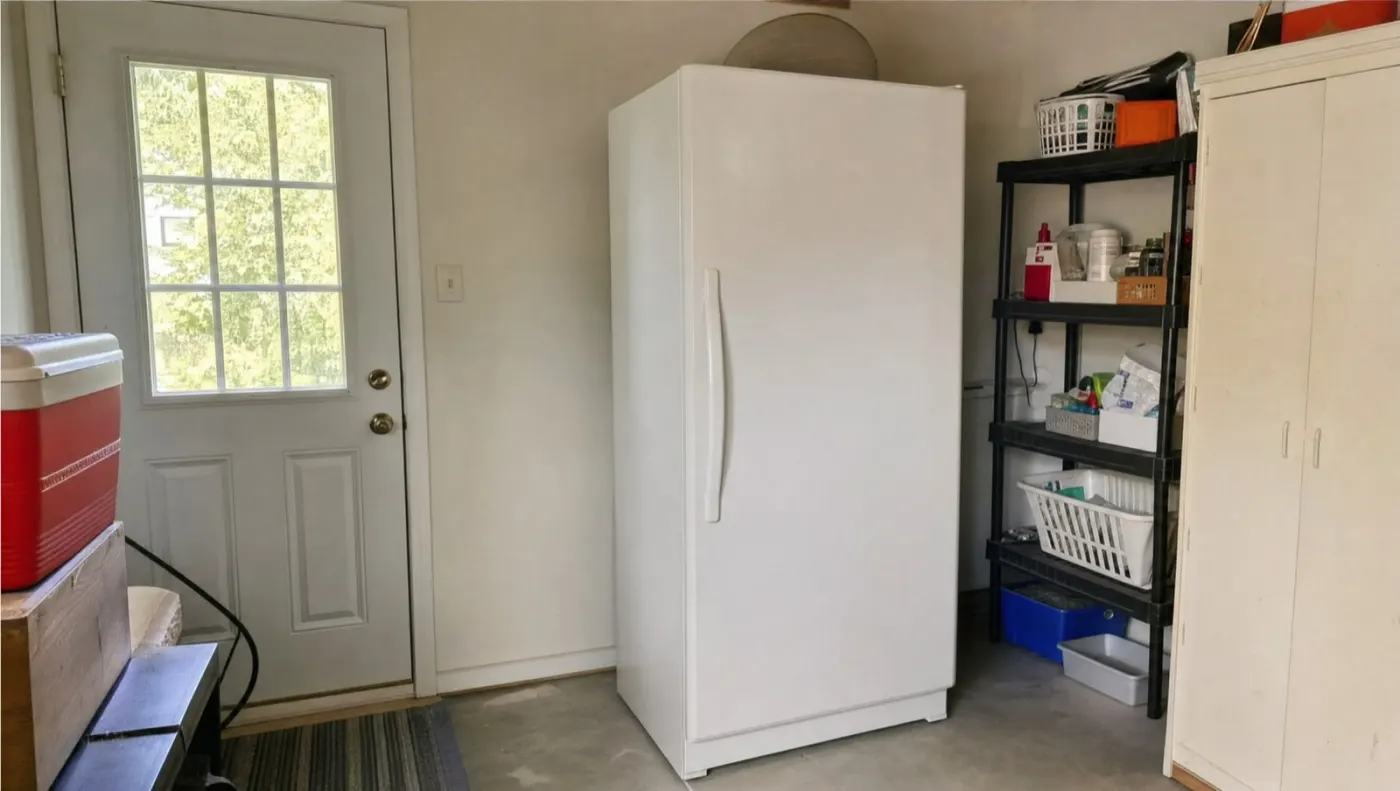
Many chest freezers, depending on the model, carry their condenser lines inside the cabinet walls, so dust and tight clearance quietly reduce cooling capacity. Keep food below the load line so the lid keeps closing tight, and give the cabinet breathing room on every side.
After Defrosting Or A Door Left Open
A thaw leaves fingerprints. Repack loosely, let it run a full day, and see where it lands. If frost returns fast after defrosting, the real problem is the door seals or the defrost system, and defrosting again just resets the clock.
How Long Does Food Stay Safe
Once The Freezer Stops?
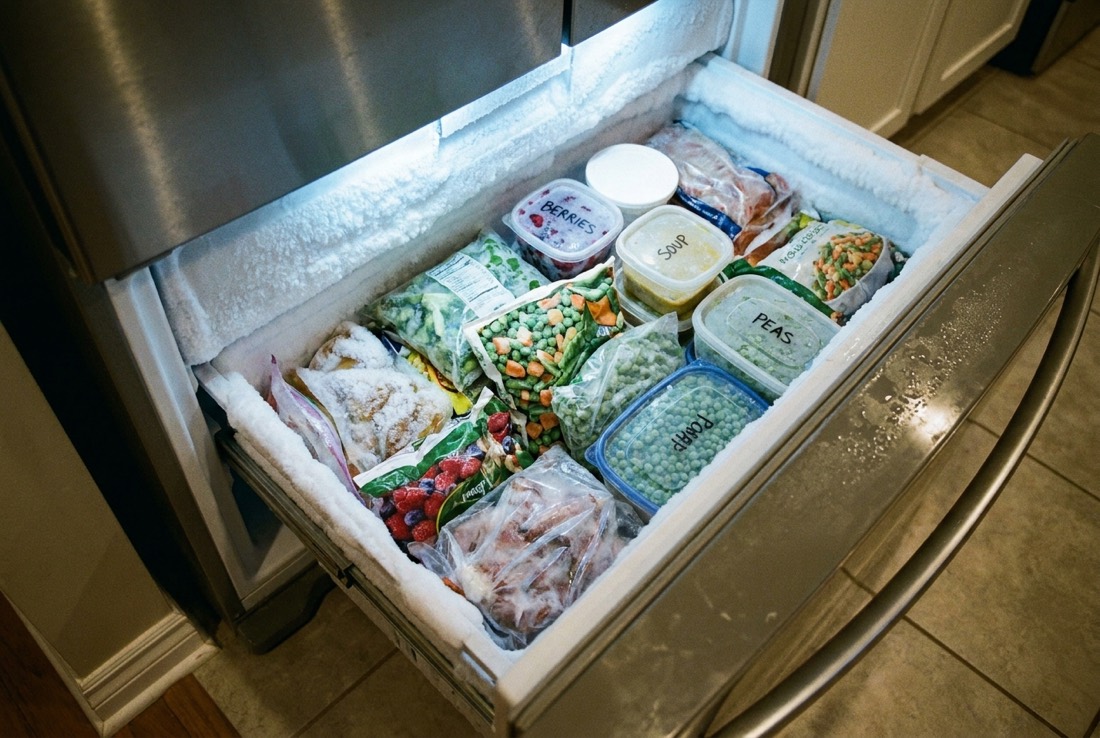
About 48 hours for a full freezer, roughly 24 for a half-full one, as long as the door stays shut. That's USDA guidance, not folklore. Cold mass protects cold mass, which is why a packed compartment buys you a whole extra day. Keeping the door shut is the essential part, so the worst move is standing there checking on it.
The refreeze rule is simpler than most people think. Food that still holds ice crystals, or reads 40 F or below on a thermometer, is safe to refreeze, though texture takes a hit. The items you store in the door typically warm first, so judge from the middle. Anything above 40 F for more than two hours goes, starting with meat and leftovers, because the risk isn't worth it. Smell isn't a test. When in doubt, out.
And if the timeline is tight, say the freezer's been drifting all week and half a crab feast is sitting in there, mention it when you call, or text us at (443) 678-8144, and the team can help triage what to check first.
 60-second quiz
 Fix The Freezer, Or Replace It?
Eight quick questions about your freezer, and you get a straight answer. We weigh how old it is, what has failed, and what the repair runs against the price of replacing it.
When Should You Call A
Service Professional?
Call when the checks come up clean and the compartment still can't hold 0 F, or when the symptoms point at the defrost system, an evaporator or condenser fan motor, the temperature sensor, the start relay, or the compressor. A freezer may also be worth a service call when it needs resetting again and again, because repeat resets mean a part has been failing for months. None of these are judgment calls to make with a multimeter in one hand and a video tutorial in the other. That's the point where you stop troubleshooting and hire a service professional.
A visit with us begins at $100 for the trip and a full diagnosis, and a trained technician finds the root cause, not the loudest symptom. You approve one flat repair price before any work starts, and a standard repair with the part on hand is finished that visit, $225 total, almost always far less than buying and installing a newer model. If the repair requires a special-order part, our office prices it, sends you an exact quote to approve, and schedules the repair. Every repair carries a 60-day warranty on parts and labor.
We're factory certified for LG, GE, Dacor, and Broan, and we service the rest of what Baltimore kitchens actually hold, from Samsung and Whirlpool to Frigidaire and Kenmore. Homeowners have rated the work 4.6 stars across 251 Google reviews, and our techs cover greater Baltimore and five surrounding counties from our Dundalk shop, with weekday appointments often available within 48 hours. Details on what we fix live on our freezer repair in Baltimore page.
If we find nothing wrong, you get your $100 back.
Get The Freezer Looked At
Leave your details and our support team follows up to hear what you're seeing, soft ice cream, frost on the walls, a clicking sound, and to confirm your weekday appointment. One flat price to approve before any work, and a 60-day warranty behind it.
- $100 for an expert visit and a full diagnosis
- Factory-certified techs, weekday appointments
- 60-day warranty, plus your $100 back if we find nothing wrong
- Hours
- Mon-Fri, 9am-5pm
- Service area
- Greater Baltimore and five surrounding counties, based in Dundalk
Prefer to book now? Schedule online or call (443) 678-8144.
Freezer Not Freezing,
Answered
What is the most common reason a freezer stops freezing?
The most common cause of a freezer that stops freezing is one of four everyday problems: a bumped temperature setting, air vents blocked by packed food, dirty condenser coils, or a worn door gasket. Rule those out before you spend a dollar on parts, because the likely causes are also the smallest fixes.
Why is my freezer humming but not freezing?
A freezer that hums and runs without freezing usually can't get rid of heat. Dirty condenser coils or a worn condenser fan motor stop the unit from dumping heat, so the compressor hums along while the compartment sits warm. If the freezer is cold but never cold enough once the coils are clean, have a technician test the sealed system, the start relay, and the temperature sensor before anyone calls it a failed compressor.
Why is my freezer not freezing but the fridge is cold?
A freezer running warm while the fridge stays cold points at the freezer side of the airflow loop: a defrost system that's let frost buildup swallow the evaporator coils, or an evaporator fan motor that's given up. The fridge needs far less cold, so it coasts while the freezer slips. It's a common service call, and a very fixable one.
Does a freezer have a reset button?
Most freezers don't. Unplugging the unit for five minutes and plugging it back in is the closest thing to a reset, and some digital models reset through the control panel, so consult the owner's manual or the use and care guide. If it needs resetting more than once, the start relay or the controls are failing, and a reset is just a snooze button.
How long does a freezer take to get cold after a reset or power outage?
Give a freezer a full 24 hours to get cold after a reset or an outage before you judge it, longer if it's empty. Track it with an appliance thermometer instead of your hand. If the freezer is not freezing after a full day at the right set temperature, stop waiting and get it diagnosed, because the food clock is already running.
How can I tell if my freezer is broken or just struggling?
Put a thermometer inside and give it 24 hours at the recommended setting to determine which one you have. Holding 0 F means it's working fine. Hovering in the teens or twenties means something is genuinely wrong, even if the food still feels hard. Soft ice cream, frost creeping along the interior walls, and a compressor that clicks instead of hums are the three early signs worth trusting.
Why is my freezer not freezing ice cream?
Ice cream is the first food to complain, because it needs a true 0 F to stay firm. A compartment running 10 or 15 degrees higher than that keeps everything else frozen while ice cream turns to soup, and that usually traces to dirty coils, a tired gasket, or a freezer packed past its airflow. Treat soft ice cream as an early warning, not a fluke.
Why is my chest freezer not freezing?
Chest freezers usually fail around their edges, literally. Many run their condenser lines inside the cabinet walls, so blocked clearance and dust rob cooling capacity, and food stacked above the load line keeps the lid gasket from closing tight. In a garage or a tight basement corner, give it a few inches of breathing room on every side before you assume the worst.
Why is my freezer not freezing after a power outage?
Check the breaker and the outlet first, since outages trip more breakers than people expect. Then allow a full 24 hours of recovery, because a warm, full freezer has real work to do. If it never pulls back down, the surge may have finished off a weak start relay or a compressor that already struggles to start, and both are quick finds for a technician with a meter.
Is it worth fixing a freezer?
Usually, yes, when the unit is inside its expected lifespan and the fix is a common part like a fan motor, a gasket, or a relay. A repair almost always runs far less than buying and installing a newer model. Our repair vs replace guide walks the full math, and a diagnosis gives you the exact numbers for your unit before you commit either way.
When is a freezer too old to repair?
A freezer is too old to repair when a major part, like the compressor or the sealed system, fails on a unit already past the lifespan its manufacturer lists. A gasket, a fan, or a relay on an older freezer is still usually worth fixing. Following the model specific maintenance recommendations in your manual, mostly coil cleaning, is what keeps a unit running toward the far end of its life.
How much does it cost to fix a freezer that won't freeze in Baltimore?
Fixing a freezer that won't freeze begins at $100 for the visit and a full diagnosis, and if we find nothing wrong, you get your $100 back. From there you approve one flat repair price before any work starts, backed by a 60-day warranty on parts and labor. The full breakdown lives on our pricing page, with no surprise math anywhere in it.
Ready For The
Real Answer?
If the unit is old enough that you're thinking replacement, our appliance repair vs replace guide runs the honest math, and the 1-minute quiz gives a fast read. Otherwise, explore the flat-rate breakdown on our pricing page and book the diagnosis. Your freezer gets a straight answer either way.